My name isn’t what’s written in my documents, and I don’t work for just one person.
Every few weeks I get a message from someone I’ve never seen: find it, verify it, deliver it, place it. The clients vary — private collectors, organizations with no sign on the door, commissions you won’t read about in the news. If you like, call me a freelancer for secret societies and clandestine organizations.
This time I was handed a stone figurine with nine openings and given two days. Two days to find a manuscript in a Venetian library that no one had opened in four hundred years, work out from it a single location on Cyprus, and place the figurine there before a very wealthy man — who had a four-year head start on this race — could do the same.
What would happen if I didn’t make it in time, I was about to find out over the course of an unplanned new journey.
Below, I’ll share the notes I made during the trip and after it, trying to understand what actually happened. As a rule, I’m never given the backstory — I have to piece it together myself, digging up the rest through my own investigating. I’m publishing this at my own risk, but I feel like I have to share it with you and pull back the curtain on a world where, it seems, things happen that you couldn’t even imagine.
The Legend of the Stones
The thing is, there are stones on Cyprus. And they’re not ordinary stones.
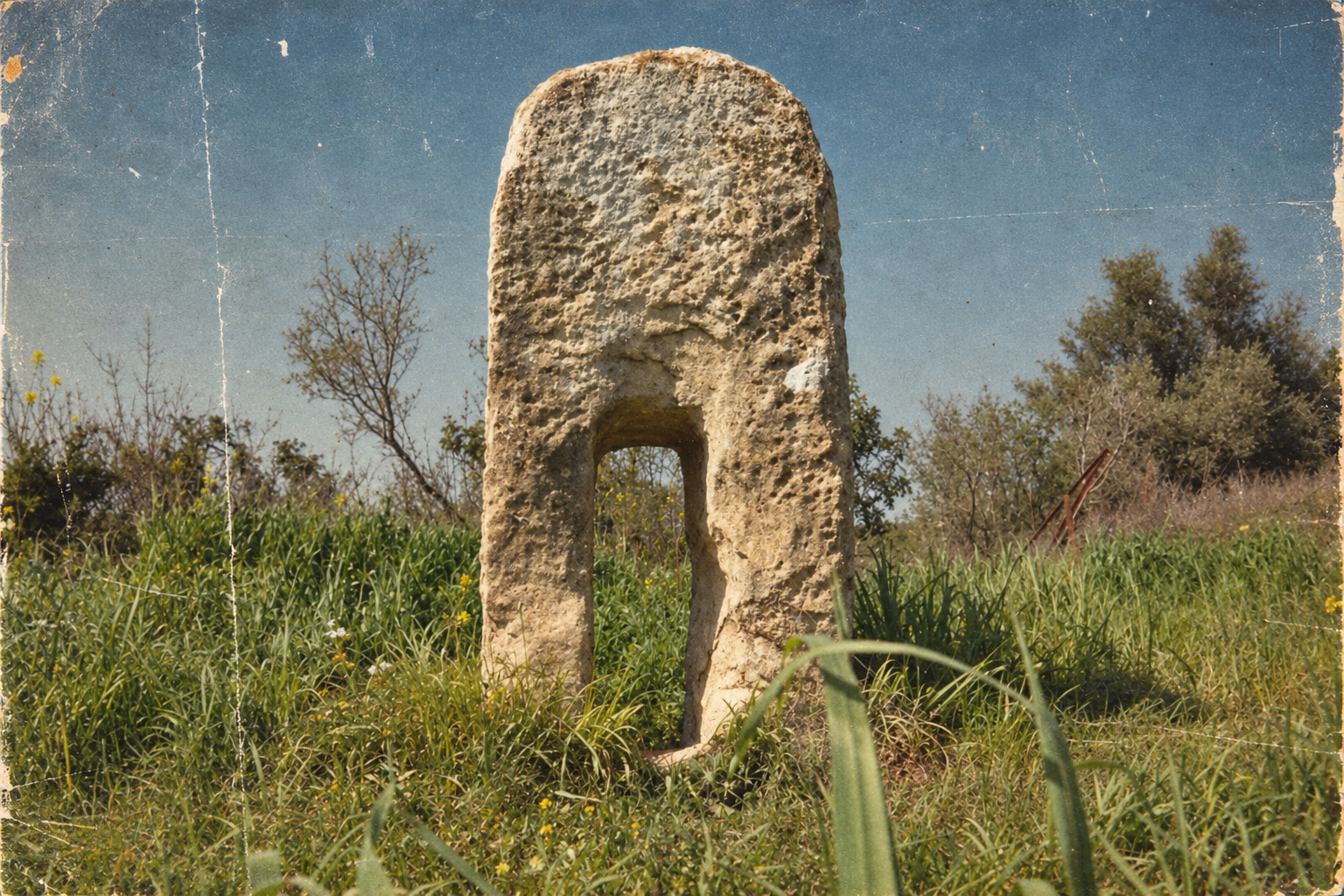
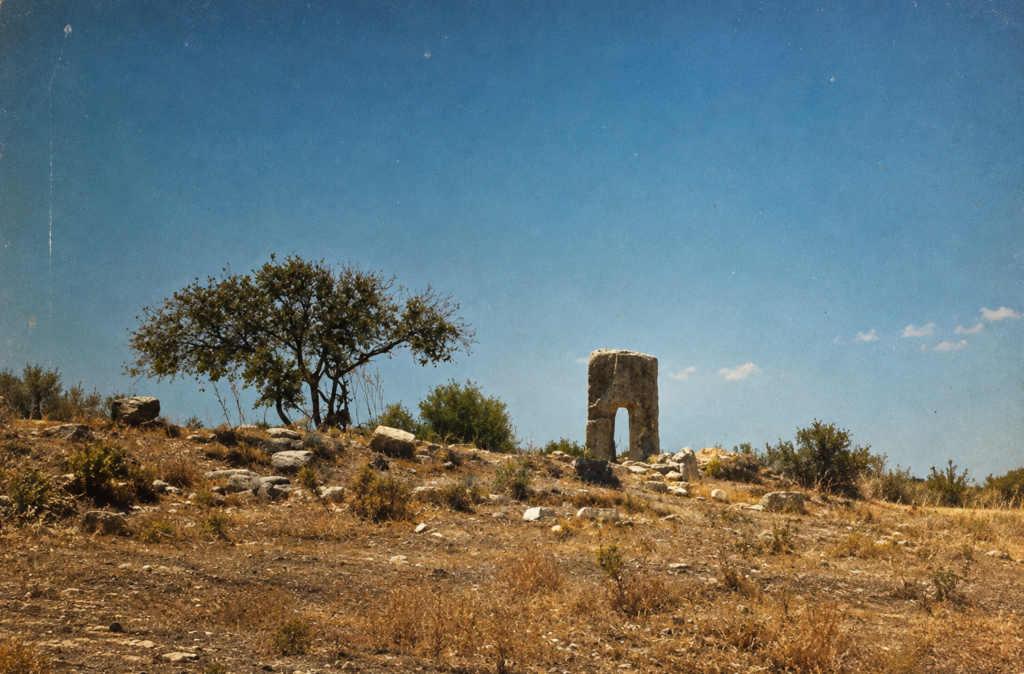
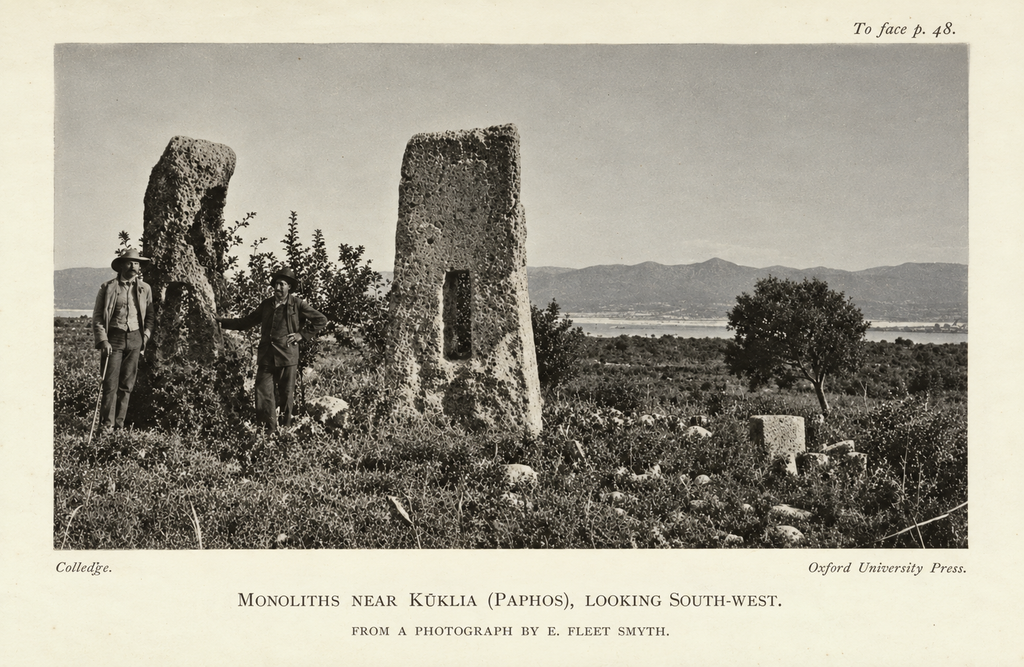
Slabs the height of a person, sometimes taller, with a single opening straight through the middle (example: Agios Stephanos Monolite, Google Maps). They stand in fields, by roadsides, among olive trees. Thousands of years old, maker unknown, purpose unknown. Explanations abound — from construction tools to astronomical sighting devices. There’s a whole separate article about it, and it goes into plenty of detail.
Only one thing matters here: people pass through the openings in these stones to be healed.
Infertile women who can’t conceive pass through them. At the full moon, people with a wish pass through. This still happens — it isn’t a legend out of a book, it’s something happening on the island this year, and last year, and, according to the records, two hundred years ago as well.
And the stones don’t stand just anywhere. Almost all of them are near sanctuaries of Aphrodite. Someone placed them systematically, and nobody knows who.
And now for what you won’t find in any guidebook.
Besides the standing stones, there are the small stones of Cyprus. From palm-sized to forearm-length, made of the same stone, the same shape — only with several openings instead of one. They aren’t found in fields; they’re kept in homes. Passed down through families, turning up in inheritances, sitting on antique dealers’ shelves. Some people sell them without understanding their worth, and others buy them without understanding why. Still others are willing to spend fortunes hunting them down across the world.
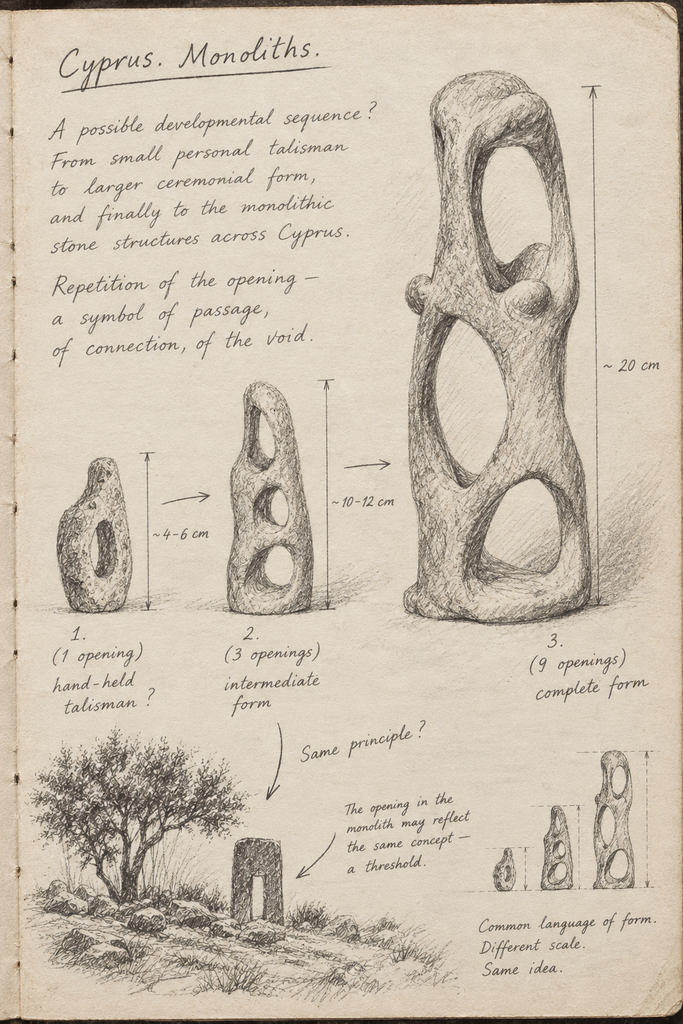
Here’s how it works.
At certain points on the map, usually near sanctuaries, there’s a socket — a base into which a small stone fits like a key into a lock. There is one socket. Whoever places a stone first claims it, and there’s no room for a second — not by any rule, but physically: there simply isn’t space. And a share once placed cannot be taken back — set it, and it’s set forever.
The sanctuaries are linked in combinations. A combination, or in other words a circle, is several sanctuaries of a single cult scattered across the island. As long as even one socket in a circle is occupied by someone else’s stone, the circle stays open.
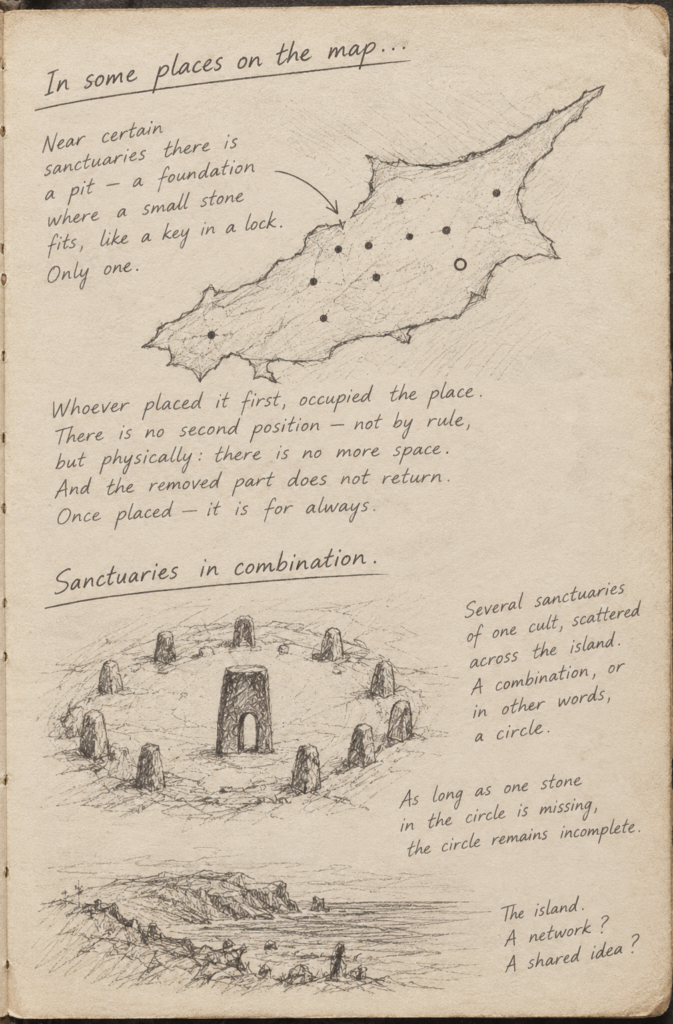
And an open circle means this: whatever people come to these stones seeking is given out to everyone, a little at a time. To the woman who passed through the opening and gave birth a year later. To the old man whose fever broke. To everyone who came and asked. Not fully to anyone — a little to everyone, once each, exactly enough to cover their trouble.
It stood this way for thousands of years. Not because anyone guarded it, but because the small stones scattered into strangers’ hands and no one kept count of them. Disorder itself was the protection.
But if someone gathers the right stones and fills every socket in a circle, the circle closes. And then everything that had been given out in crumbs to thousands of people gathers into a single point and goes entirely to one owner.
Not a one-time healing, but a permanent one. Lifelong. True immortality. Because what used to heal many people a little at a time would now continuously heal one single person.
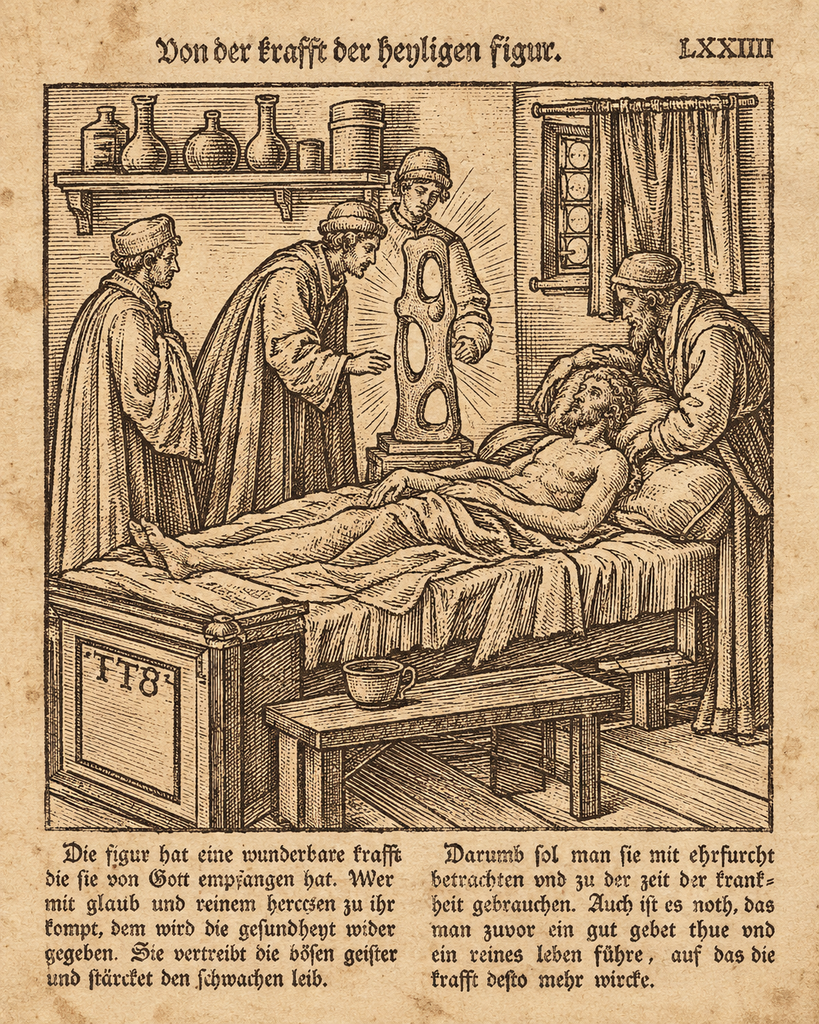
This is what the man I’ll tell you about next came here for. Not for money, and not for power. He is dying, and he wants to stop.
And now — the most unpleasant part.
When the circle closes, nothing will happen. No thunder, no sign, no crack in the earth. The stones will stay standing right where they stood. People will keep coming, passing through the opening, bringing their sick children, making wishes at the full moon. They’ll wait and hope, but the stones will simply stop working.
And no one will ever know that something was taken from them. Everyone will simply decide it never really worked in the first place.
Auguste Cordier and His Foundation
The man I’m working against this time is called Auguste Cordier. At least, that’s the name he goes by.
He’s seventy-nine. His fortune is the kind of size that stops meaning anything — somewhere past the fifth billion the numbers turn into abstraction. Made in raw materials and logistics; the details aren’t interesting and are all a matter of public record.
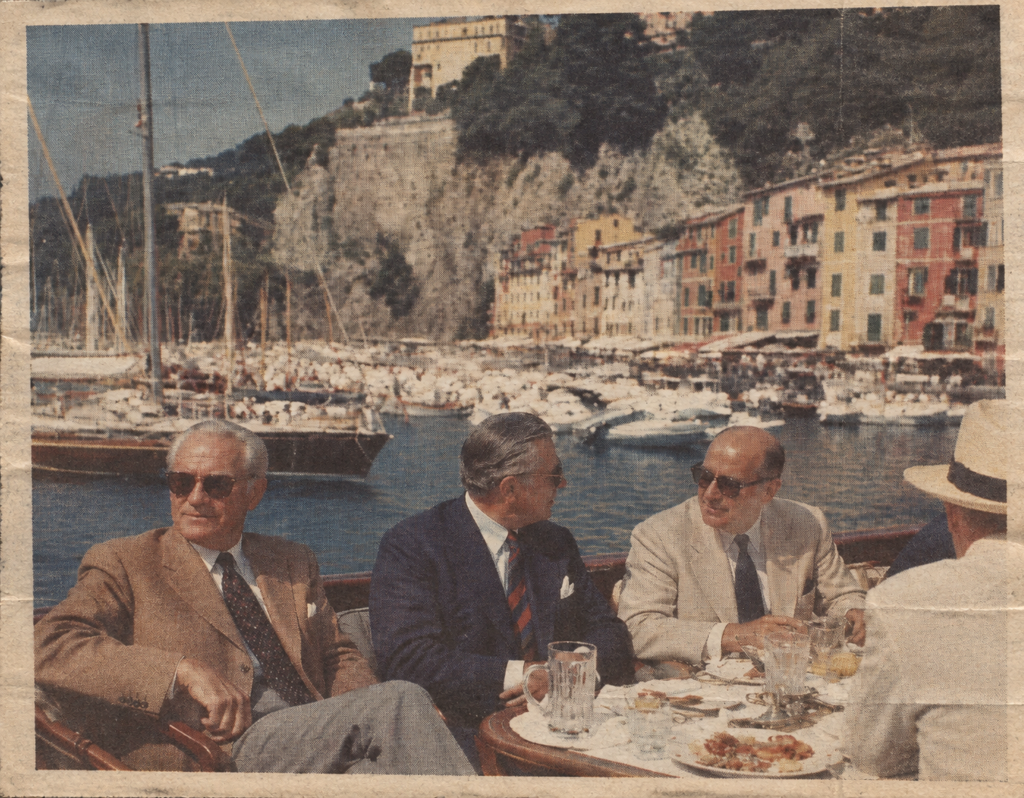
What’s interesting is something else: for the last fifteen years he’s spent almost everything trying to achieve immortality.
Clinics in Switzerland and California. Laboratories working on cellular aging. Grants, fellowships, research programs with elegant names. Publicly, it’s presented as philanthropy — a fight against aging for the benefit of all humankind. Formally it’s all above board: people really do work there, papers really do get published.
The trouble is, none of it tells him what he actually needs to know.
Biology turned out to be stubborn even against money. You can buy the best specialists on the planet and still hit a wall with nothing behind it. About four years ago, it seems, he was given a timeline. What exactly the diagnosis was, I don’t know, and it isn’t my business. All I know is that around then his interests shifted sharply.
He landed on Cyprus by accident — through his own money. His foundation funds the conservation of monuments across the Mediterranean, and in one of the reports he never read himself, a contractor mentioned, in passing, a local belief about stones that the sick pass through.
He didn’t believe it. Then he checked. Then, as far as I can tell, he stopped sleeping.
Over the following years he collected the small stones scattered through private collections in Europe and the Middle East. He bought through intermediaries, at auctions, from families who had held onto them for generations without any idea what they actually had. Nobody asked questions: it isn’t gold, it isn’t paintings, it’s chunks of stone with holes in them.
And then he started placing them.
And this is where his restoration foundation stops being a cover and becomes a tool. The Cordier Foundation has spent twenty years sponsoring the conservation of Mediterranean monuments — legally, publicly, with letters of thanks from ministries of culture. That gives him something money alone can’t buy directly: legal access to sites and the ability to run research there. Because owning the little stone figures isn’t enough — you also have to know the combinations, to work out exactly where the sockets they belong to are located.
Overlay the list of sites in his program over the past four years onto the list of sanctuaries in a single circle, and the overlap becomes indecent.
By this point, every socket but one was occupied. A single figurine stood between him and his goal. No, he isn’t a villain out of a book. At least that’s how I think of him now, based on what I know. He’s just a very rich, very frightened old man who wants to live forever. It’s the most understandable wish there is. The problem is he intends to live at everyone else’s expense.
He’d had the stone for a long time — what he didn’t know was where to place it. Only one address remained to be worked out.
The Library in Venice
To figure out where to place the last stone, you don’t go to Cyprus. You go to Venice.
The logic here is simple and not the least bit mystical.
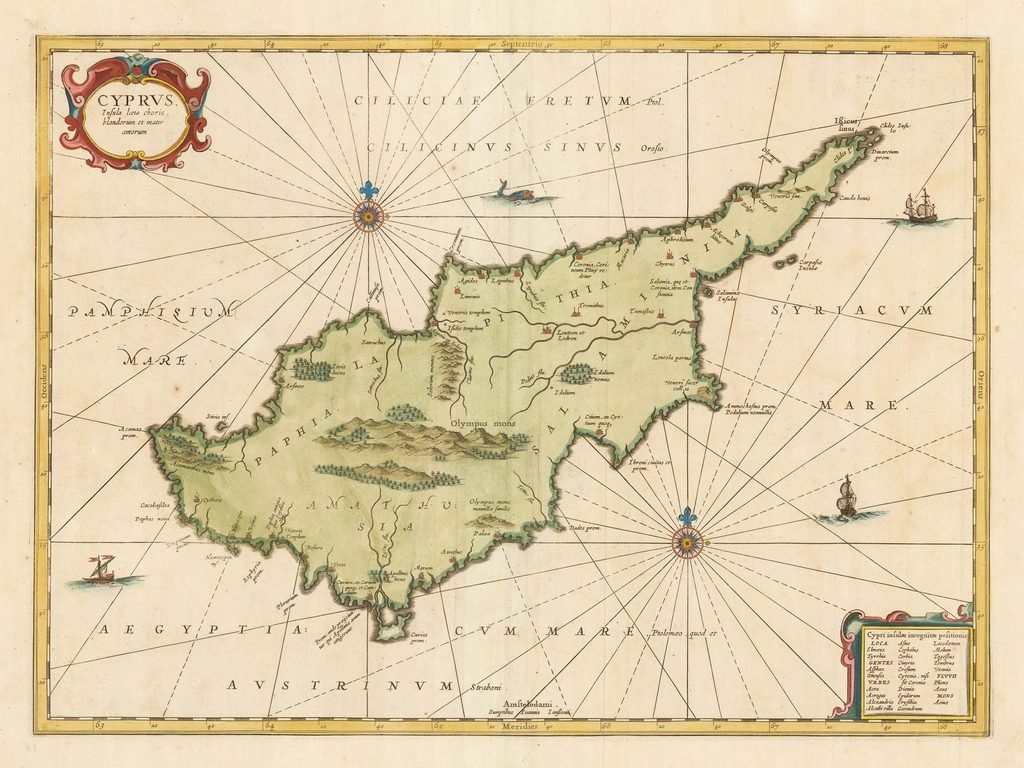
From 1489 to 1571, Cyprus belonged to Venice. Not as an ally, not as a trading partner — as a colony. The island’s last queen, Caterina Cornaro, Venetian by birth, was forced to abdicate and taken home; rule passed to the Republic, a governor sat in Nicosia, and the island itself became a Venetian military base in the eastern Mediterranean.
For eighty-two years, Venetians documented the island. Officials kept registers, engineers drew fortifications, cartographers surveyed the coastline, tax collectors counted people and property. And everything recorded on Cyprus went back to Venice.
And then something happened that turned an ordinary colonial archive into something important.
In 1570 the Ottomans came. Nicosia fell after a siege; a year later Famagusta surrendered, and the Venetian commander was executed publicly, as an example. The island was lost for good.
But there was a year between the start of the invasion and the end. A year in which the Venetians on Cyprus understood they were leaving and — perfectly naturally for them — kept on compiling inventories. Not to carry things away. To record them. Everything that couldn’t be loaded onto a galley: walls, harbors, roads, fields.
And stones.
This is how an untitled manuscript, “An Inventory of the Stones of Cyprus,” ended up in the Venetian collection, bound into a compilation with other Cypriot documents. Written in a secretary’s hand, late sixteenth century, Latin mixed with Greek.
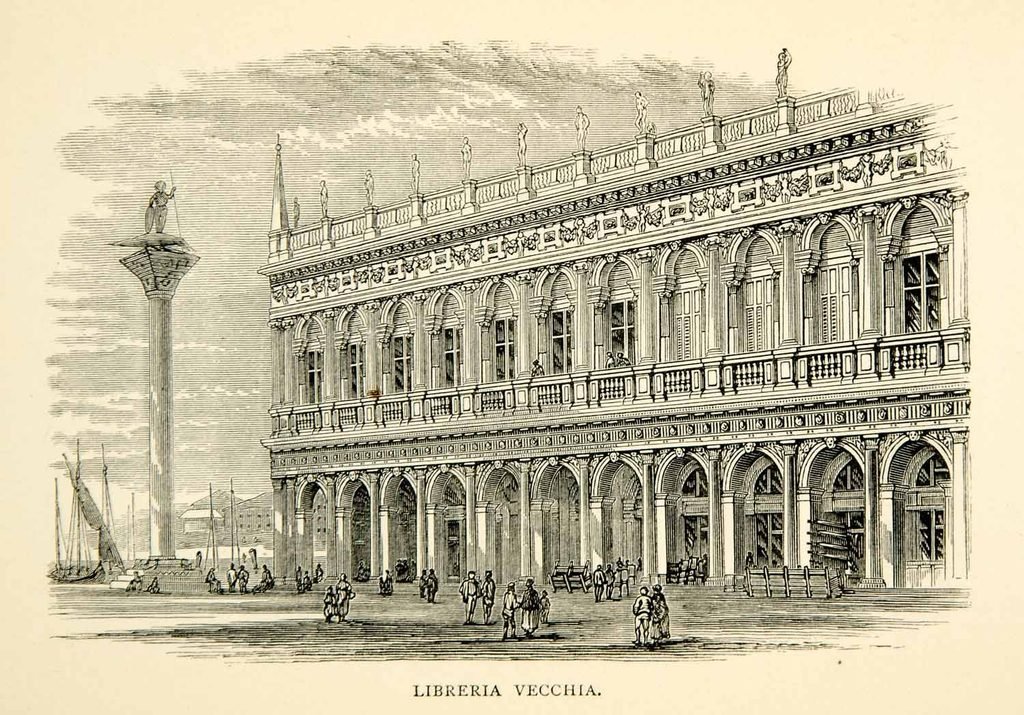
It sits in the Biblioteca Nazionale Marciana (Google maps), on the Piazza San Marco, next to the Doge’s Palace. The library is six hundred years old: it was founded by Cardinal Bessarion, who donated to the Republic the collection of Greek and Latin manuscripts he had spent his life hunting down, rescuing Byzantine literary heritage after the fall of Constantinople. Today it holds around a million volumes and more than thirteen thousand manuscripts.
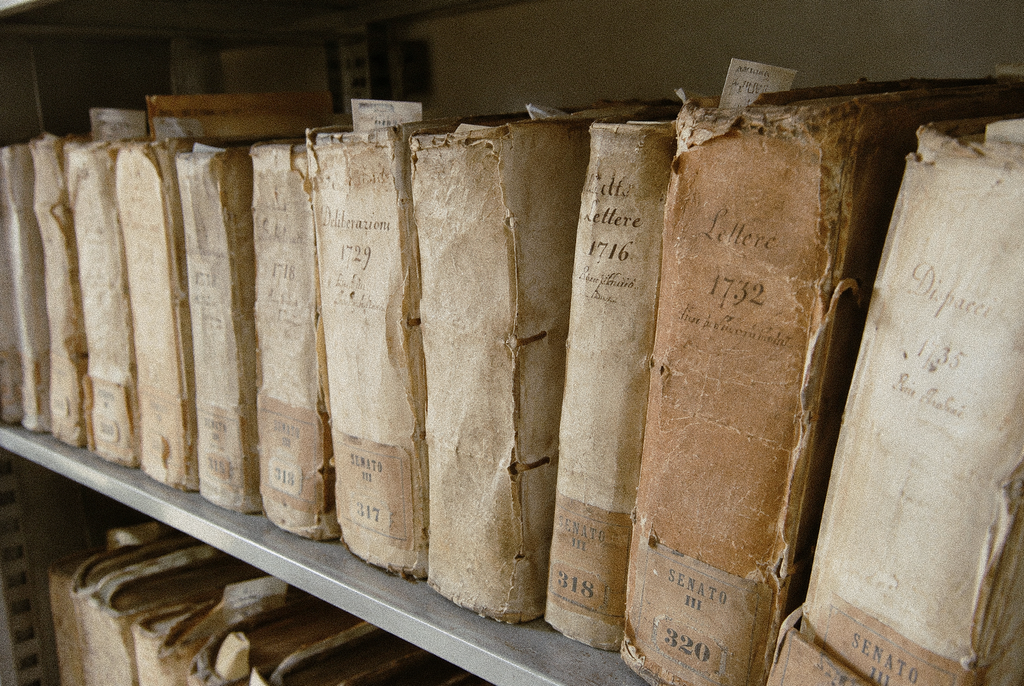
Almost everything is catalogued. Far from everything has been read. In any large archive there are things no one has ever requested — hidden not by any secret, but simply by nobody’s interest.
And it’s in exactly that kind of pile that the one document sits, the one that says where the sockets are.
Cordier’s People and Their Assignment
Cordier didn’t go to Venice himself. Men of his standing rarely go anywhere — other people go for them. Besides, the figurine need not be laid in its cradle by its owner in person. From what little is known, ownership of the lesser stones is sealed by a certain ritual. Handing the figurine to others so they can carry it where it belongs does not mean handing over the right to own it — nor the right to every boon it may bring.
He had the last stone and no address. Every socket in the circle but one was occupied; over the last four years of restoration programs, his foundation had carefully placed its figurines in spots outsiders couldn’t reach. One place remained — and no one knew where it was.
The only source where it was written down sat in the Marciana. So his people had to go there.
Their task was exactly the same one that would later be mine, and there’s something almost insulting about that. Arrive. Request the manuscript. Read three lines on folio forty-one. Work out what place they describe. Take the stone, fly to Cyprus, and set it in the socket.
I still don’t know exactly who went. One person or several, specialists or hired hands like me who were simply told “photograph folio forty-one” without being told why.
By all appearances, they worked carefully and without any flourish. They didn’t try to remove the manuscript, didn’t bribe the staff, didn’t pose as scholars with a cover story. They simply came and requested it — entirely legally, like anyone with a passport.
Which, if you think about it, is the smartest approach. Secrecy draws attention. A boring visitor requesting a Cypriot inventory draws none at all.
The Commission for the Inventory of Movable Antiquities
There’s an organization that very much disliked Cordier’s plan. It’s called the Commission for the Inventory of Movable Antiquities — and the name alone tells you what to expect.
It’s a bureaucratic body under an intergovernmental archaeological agreement. A few dozen people across several countries, an annual budget the size of one senior executive’s salary, an office on the third floor of a building shared with three other agencies. Their job is dull and perfectly clear: make sure objects stay where they’re supposed to be. Registers, cross-checks, customs inquiries, correspondence with museums.
No mysticism whatsoever. No men in cloaks. Men in cardigans, with bad coffee and a good memory for lot numbers.
And here’s the important part: not one of them believes the legend. When they explained the assignment to me, the word “power” never came up once; about the monoliths they said exactly what’s written in the reference guide — ancient stones of unknown purpose, a protected object.
Their reasoning was entirely different, and, frankly, I like it better than any mysticism.
If a man worth several billion has spent four straight years systematically buying up low-value stone objects through intermediaries, and then placing them at protected archaeological sites under cover of his own restoration grants — it doesn’t matter what he personally believes. What matters is that he’s doing it. A scheme like that doesn’t get built for the sake of a collection.
Which means something is being prepared that they don’t understand. And under their charter, anything they don’t understand is to be stopped.
Whether it’s magic or smuggling — to them, frankly, it makes no difference.
My Assignment
The people from the Commission for the Inventory of Movable Antiquities reached me the usual way: through a middleman who sometimes passes me work from people who’d rather not leave a trace.
The conversation was short. Nobody explained any philosophy or any charter to me. I was handed a figurine wrapped in a hotel towel and a three-point assignment.
First: fly to Venice, to the Marciana, and use the “Inventory of the Stones of Cyprus” to determine where the circle’s last unoccupied socket is.
Second: fly to Cyprus.
Third: place the figurine in that socket — before Cordier’s people do the same with theirs.
That was all. No cover story, no instructions for complications, no explanation of what to do if I was too late. People who don’t believe in magic don’t see the need to discuss what happens if the magic works.
I only asked one thing: why me, and not one of their own staff.
They told me Commission staff have to clear their trips and file reports, and clearance takes two weeks. I, on the other hand, have no superiors, no reporting requirements, and no need to explain why I’m flying anywhere.
In other words, I wasn’t hired because I was better. I was hired because I was faster.
Either that was the truth, or they wanted me to think it was.
The Road to Venice
I flew out the next morning. Carry-on only, no checked bag — the thing I was transporting fit in a backpack and, as far as any security check was concerned, was a chunk of stone. Chunks of stone you’re allowed to carry.
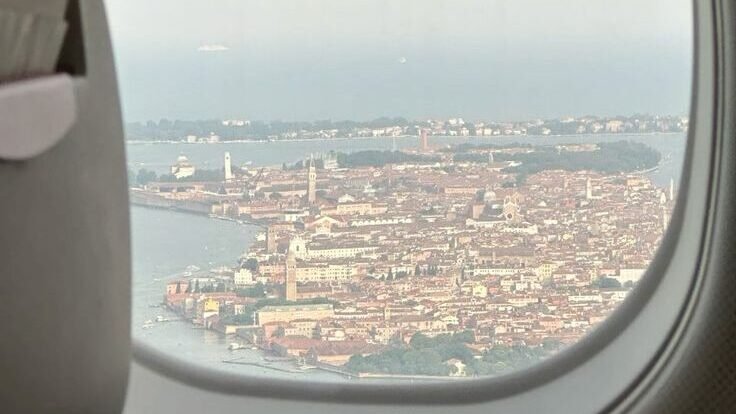
Venice begins with water before you’re ready for it. The plane comes in over the lagoon, and for three minutes there’s nothing under the wing but a fine ripple and sticks poking out of it — the channel markers, because the lagoon is shallow and you can’t cross it without them. Then the city appears: not a shoreline, not a bank, but a city itself, standing in the water with no transition at all.
At Marco Polo Airport, it’s about a ten-minute walk from the terminal along a long covered corridor to the pier. A strange feeling: you’ve landed, but you haven’t arrived yet, because beyond that point planes stop and boats begin.
I took the vaporetto, the line across the lagoon.
Forty minutes by water. First the open lagoon, flat and empty, with scattered islands: Murano passes on the left, then nothing, then nothing again. The water is a murky green, and gulls sit on the posts one at a time, spaced out like they were arranged.
Then Venice appears, and that’s when you understand why millions of people come here every year and why all of them look slightly stunned.
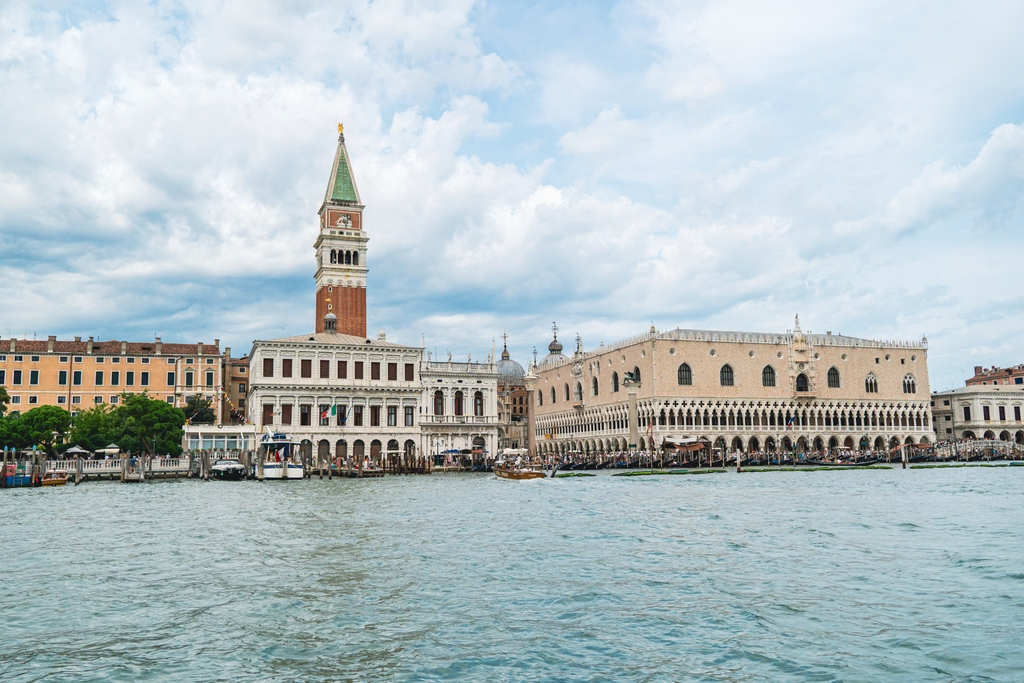
It doesn’t look real. It looks like a stage set someone forgot to strike. Houses stand directly in the water, no foundation, no embankment, nothing — the wall just runs down into the water, with a green band of algae marking the waterline. Ground-floor doors open straight onto the canal.
I got off at San Zaccaria, two stops before the main square, because there are fewer people there.
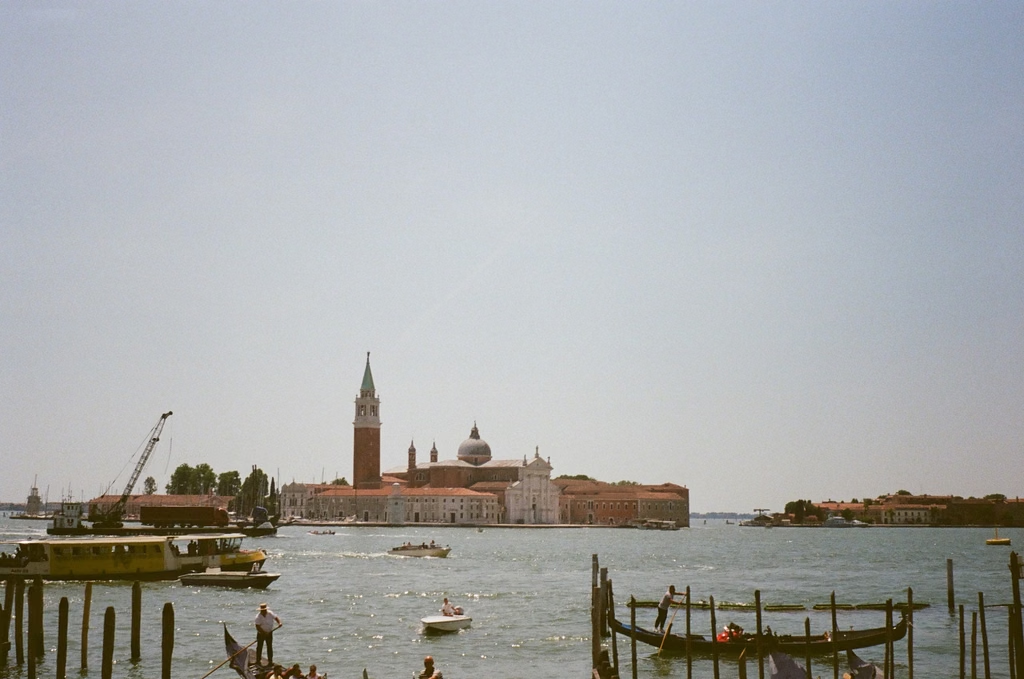
The Cost of Failure
What would happen if Cordier’s people got there first was explained to me dryly, like a line in an instruction manual.
If Cordier’s people place their figurine first, the socket is taken. It can’t be removed. There won’t be a second socket.
I asked why exactly that was bad for them specifically. The answer had nothing mystical about it: a man has spent four years placing objects at protected sites through his own grants, and if he succeeds, it means the scheme works — and tomorrow the same scheme could be used to smuggle anything out of anywhere.
“What worries us isn’t that he believes in the stones,” they told me. “What worries us is that it’s working for him.”
A good answer. Level, bureaucratic, committing to nothing.
And I doubted it.
People worried about precedent write memos and wait two weeks for approvals. They don’t reach out through a middleman to someone with no reporting obligations and have him fly out the next day. That’s what you do when you’re afraid of being too late. And you can only be too late for something that’s actually going to happen.
Maybe they hadn’t told me what they believed. Maybe they’d told me what’s convenient to say to a hired hand.
The legend is far more direct about it.
If you believe it, everything comes down to one simple thing. If I worked out the exact coordinates in the Venice library, then went to Cyprus and placed our figurine in the right socket before Cordier’s people did, the power of the stones would hold. If I was too late, Cordier would complete the combination and take the full power of the stones for himself.
One billionaire would become immortal, and thousands of ordinary people would be left without their last hope of healing. Their last hope, in the literal sense. People don’t usually come to these stones first — they come to them last.
I doubted the legend too, of course.
But now it was on me, regardless of what exactly I believed.
About the Figurine
The figurine was handed to me at the hotel, wrapped in a towel — someone at the Commission had decided that would draw less attention than a case. They may have been right.
It fits in one hand — about twenty centimeters tall. The stone is pale, limestone or something close to it, with a warm yellowish sheen where hands have touched it, and rust-colored stains in the recesses where water has worked into it over centuries. The surface isn’t polished — it’s smoothed. That’s what stone looks like when it’s been held for a long time, not when it’s been ground down.
The first thing you notice is the silhouette. A flat figure, widening toward the base, standing on its own without any support. Set it beside a photograph of any Cypriot monolith and remove the scale, and you won’t notice the difference right away: the same heavy base, the same rounded top, the same gap through the middle. One shape at two sizes. Except the monolith in the field has one opening — a large one, human height, to pass through.
This one has nine.
It’s hollow inside. Figures stand in a circle, and the gaps between them are the openings. Three rows of three, bottom to top. Nine openings. You have to count them against the light, turning the stone toward the sun.
The legend puts it briefly: the number of openings is the number of places the stone answers to. A standing stone answers to one place — it’s already standing in it, it needs nothing more. A small stone doesn’t stand anywhere, so it carries within it every place it could stand.
Nine places. It will stand in one. Someone clearly went to a lot of trouble to make the choice easy to get wrong.
This, in the end, is what Venice was for. Not to learn that the figurine had to be taken somewhere — but to cross eight addresses off a list of nine.
Where the Commission got it, they told me reluctantly: seized in a customs search at a port in South America eight years ago, the owner gave up any claim to it, its origin was never established. Since then it had sat in an evidence room, among boxes nobody opens.
I turned it over in my hands the whole way to Venice. A warm chunk of limestone, heavy exactly the way a stone that size should be heavy. There was nothing to it.
I still never let go of it.
Venice. The Way to the Biblioteca Marciana
From San Zaccaria to the Marciana is a five-minute walk, and it’s the most densely populated five minutes in Europe.
The Riva degli Schiavoni in July is a dense, slow-moving mass of people. Everyone walking the same direction. Everyone on their phones. Vendors with carts, a line for the Doge’s Palace, a guide with a raised umbrella and a group in tow, someone taking a photo by the columns, someone eating gelato, someone arguing with someone else in German.
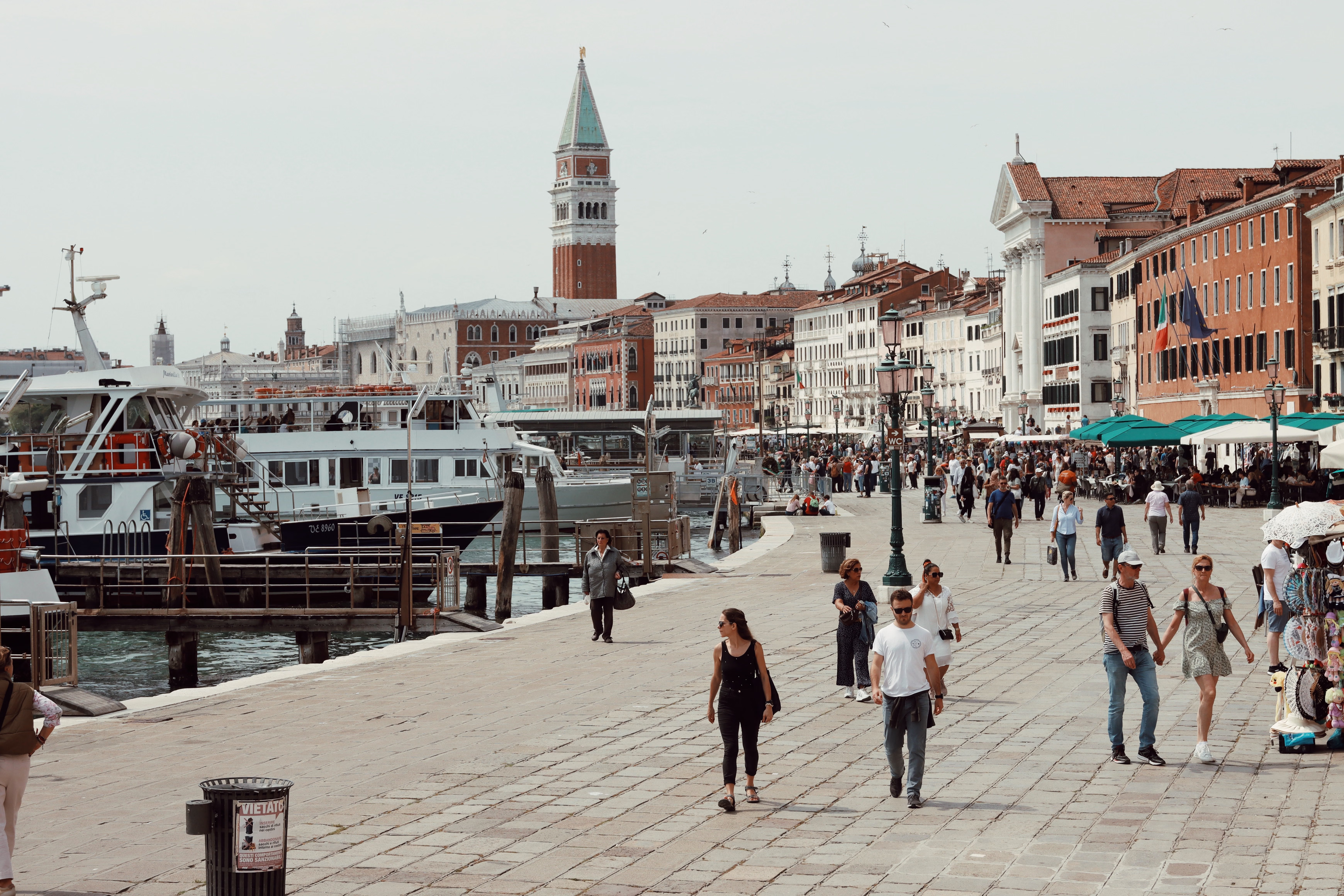
I walked through all of it with a backpack holding a stone of unknown age, thinking about how perfect this cover was. You can carry anything here. Nobody’s looking at anybody.
The Piazzetta. Two columns — a lion on one, a saint on the other — and, as the guides tell it, the condemned used to be hanged between them, which is why locals still tend to avoid walking through the gap. I walked through. Not on principle — it was just less crowded there.
And there it is, on the right. A long, two-story facade with arches running the length of the square, facing the Doge’s Palace.
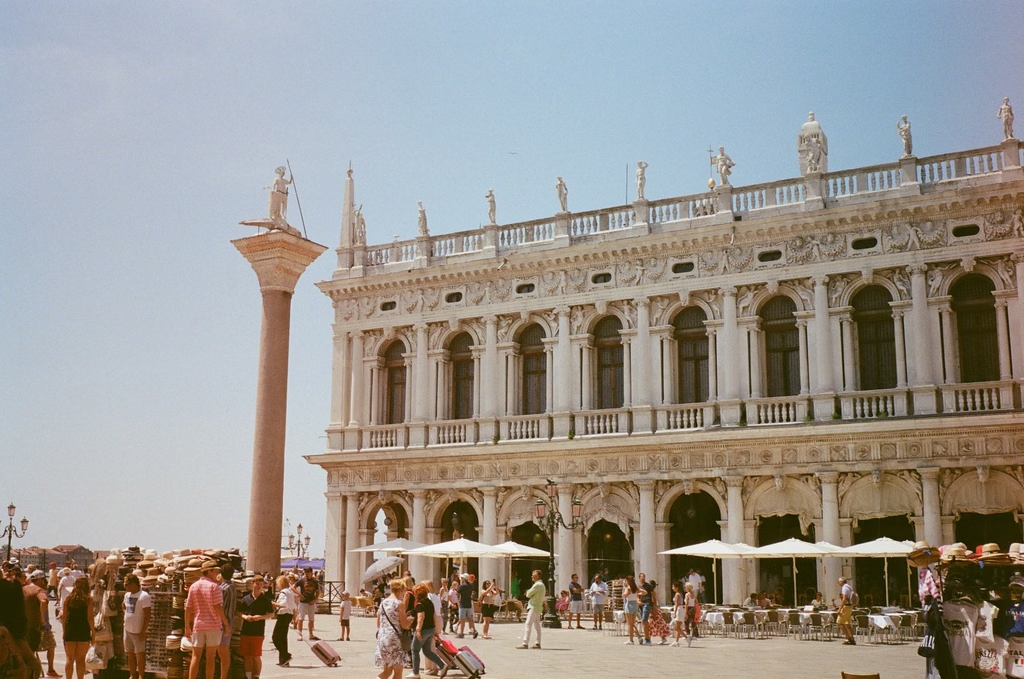
Sansovino built it. He started in 1537 — right when Cyprus was still Venetian and officials there were still dutifully sending their inventories back home. Scamozzi finished it after Sansovino’s death.
A funny detail that says a lot about the city: the library is the first and second floors, and underneath the arches, at ground level, there was always trade. Books above, shops below. Venice never separated the two.
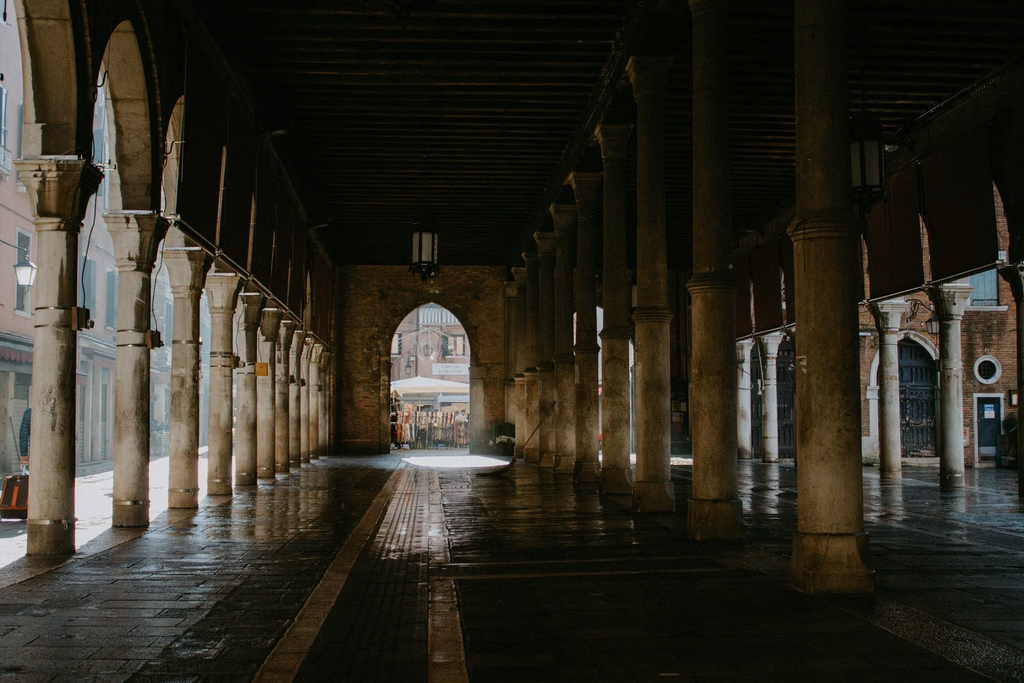
The entrance isn’t on the square, where the crowds are, but off to the side, and it’s modest enough that everyone walks right past it.
Inside, silence falls instantly, as if the door cut off the sound.
I had arrived. All that was left was to read three lines.
Cordier’s People Are Ahead of Me
At the Marciana, you don’t just take a book off a shelf.
You go to the reception desk, show identification, and get a personal magnetic card. Then you fill out a request for a specific item and wait. Manuscripts are issued in a separate reading room, and only during set hours. Every request is logged: who, what, when.
That makes places like this convenient for open work and very inconvenient for secret work. Everything you touch stays on record.
My request was accepted, and I sat down to wait. About forty minutes later they brought out the bound volume — heavy, in a cardboard folder with ties — along with the request log.
The line above mine. Same item. Twenty-four hours earlier.
The name meant nothing to me, and I’m fairly sure it wasn’t meant to.
What followed was arithmetic I worked out right there at the table, without getting up.
Twenty-four hours. In twenty-four hours you can read twenty pages, note down what you need, get to the airport, fly to Paphos, rent a car, and end up anywhere on the island. Twenty-four hours isn’t a lag. It’s a finish line that’s already been crossed.
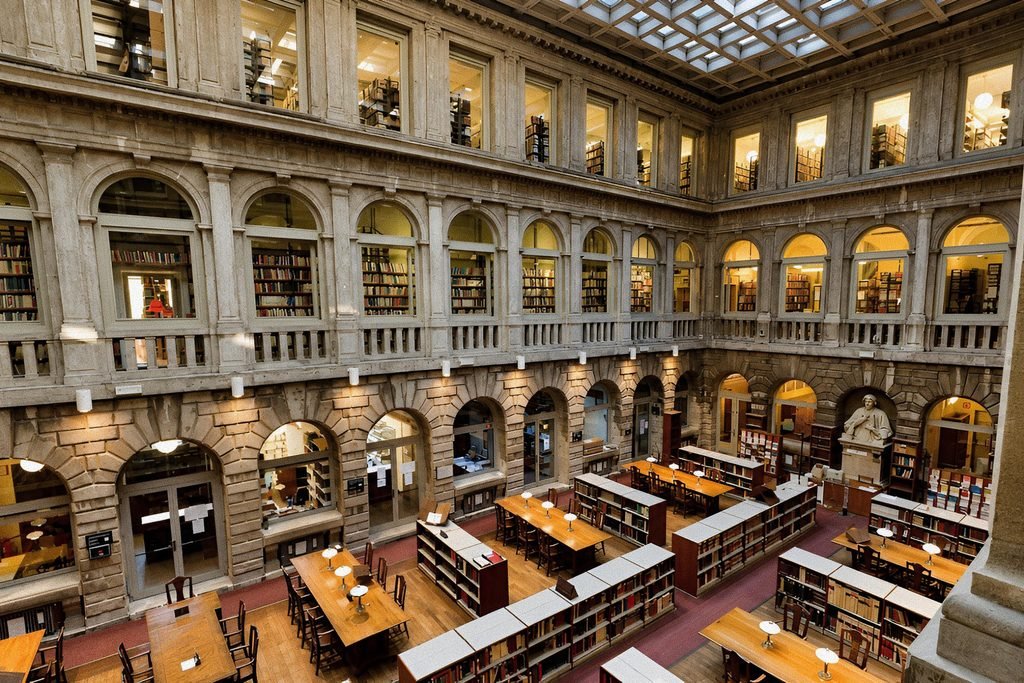
I sat in the reading room on the Piazza San Marco, holding a four-hundred-year-old inventory, and understood that I’d come in second in a race where second place means nothing.
Because there’s one socket. And whoever gets there first, stays forever.
There was exactly one question left, and it wasn’t “will I make it.”
It was: did they read it correctly.
I untied the folder.
Working with the Documents in the Library
On folio forty-one, verso, the place is described by three markers.
“On the stone that faces the sunset.” “Where the city was left before it died.” “Where the goddess was called by a name other than the one she was called everywhere else.”
And a note beneath it: “Do not look for a temple. There is no temple. Look for where the temple stood.”
The first thing that comes to anyone’s mind who’s ever heard of Cyprus is Kouklia. Palaepaphos. The main sanctuary of Aphrodite on the island, the largest center of her cult, and, importantly, the place with the greatest concentration of monoliths standing around it. It faces west. The temple is in ruins, only the foundations remain. Everything fits.
Cordier’s people read it exactly the same way, I have almost no doubt.
But two of the three markers don’t fit there.
“The goddess was called by a name other than the one she was called everywhere else.” At Kouklia she was called Aphrodite Paphia — the very name the whole ancient world knew her by. That’s precisely “everywhere else.” The wording doesn’t describe the main temple — it rules it out.
There is one place on Cyprus where she had her own name, found nowhere else: Aphrodite Amathousia. A local form, a local cult, a local temple on the acropolis.
And the second marker fits there too. “The city was left before it died.” Kouklia was never abandoned. Amathus was. Not destroyed, not burned — its people left because of Arab raids, and the city was left standing, empty.
I told my clients this. They said it was a stretch and that I needed to get to Paphos immediately and go to Kouklia, like everyone else.
I booked flights to Larnaca instead — it’s the fastest way to reach Amathus.
What Amathus Is
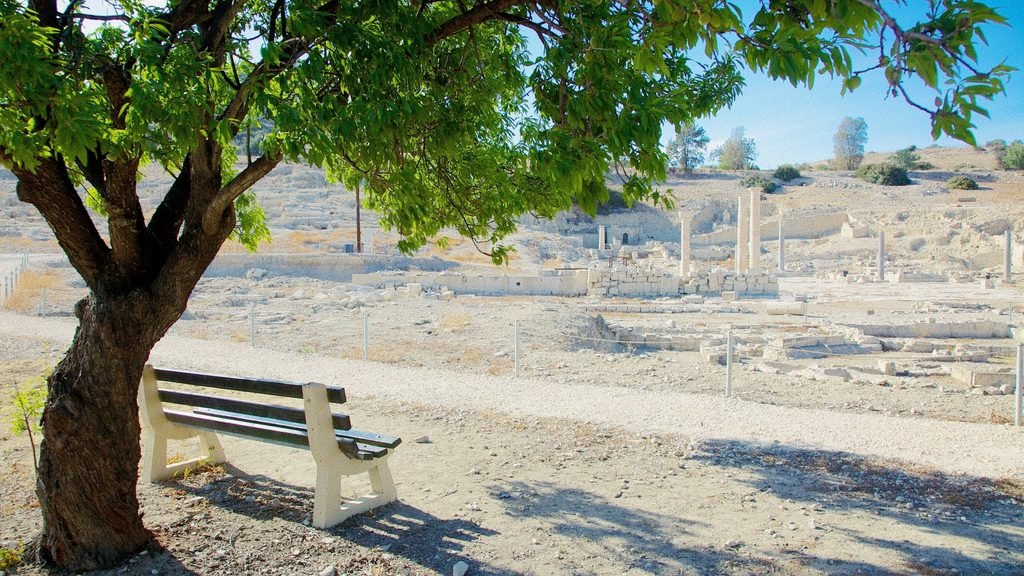
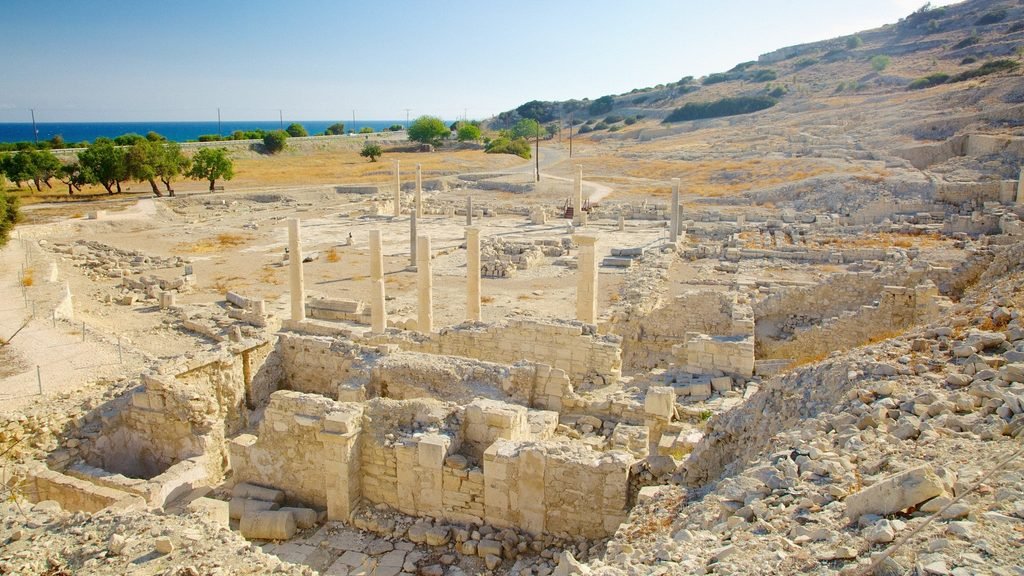
Amathus (Google map) is older than almost anything else on this island. The city was founded in the Bronze Age, the nineteenth century BC — a citadel on a hill overlooking the whole coastline. Eleven kilometers east of Limassol, a UNESCO site, two and a half euros to enter the lower city.
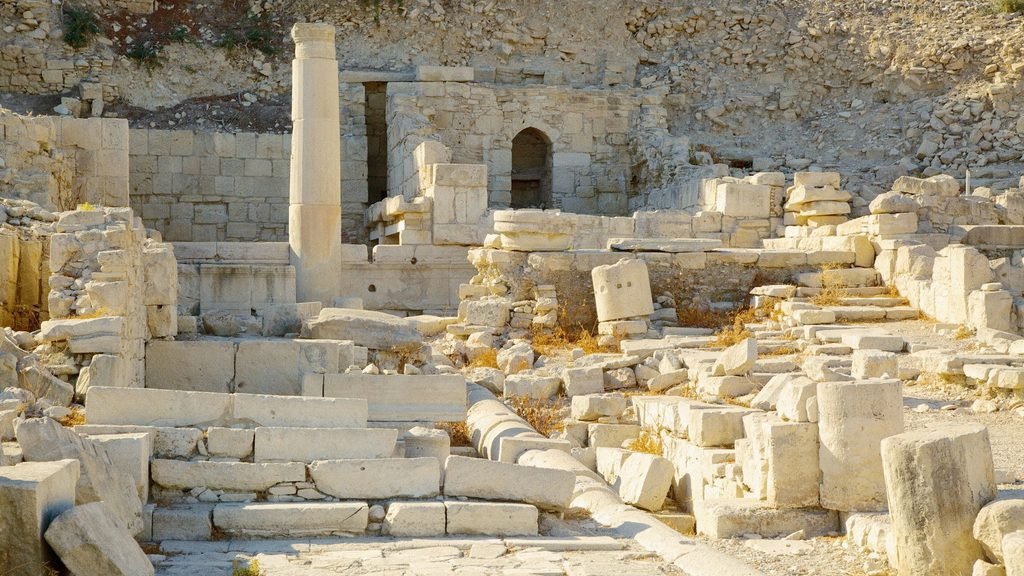
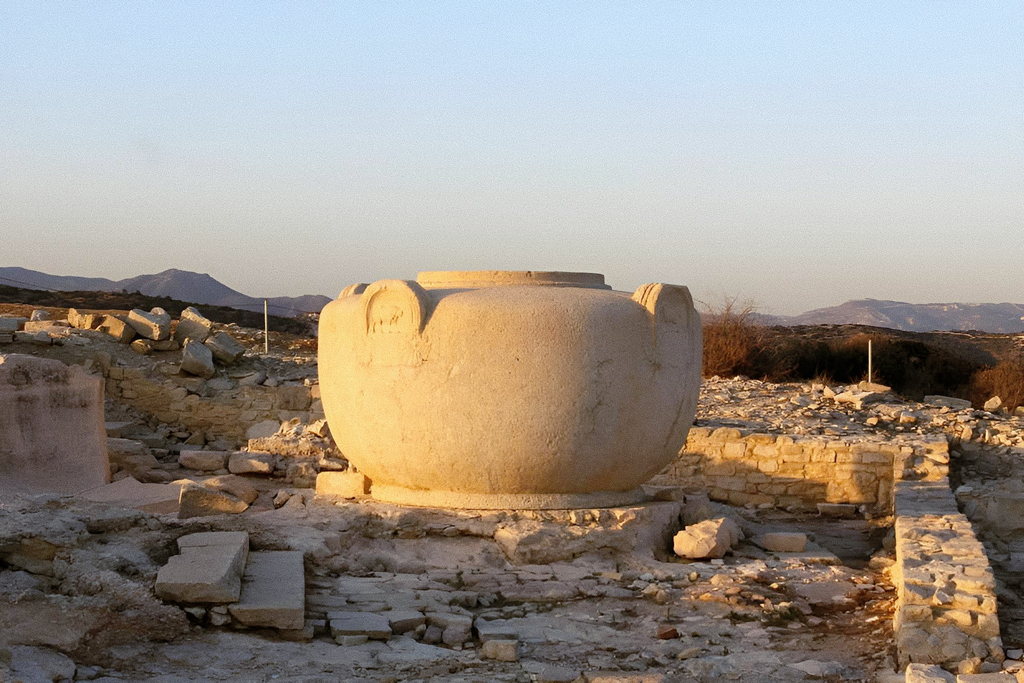
It had its own Aphrodite. Not the one worshipped everywhere else — her own, Amathousian. Her temple stood on the acropolis, at the highest point, facing the sea. Only foundations and scattered pieces of architecture remain, spread across the slope.
According to myth, the city was founded by King Cinyras. In another version, this is also where Theseus brought a pregnant Ariadne and left her in the care of the locals before moving on.
Then came the Romans, then the Byzantines, then an earthquake, then the Arabs. From the seventh century on, raids came wave after wave, and at some point people simply left. The city didn’t fall. It was left.
It stands on cliffs above the water, and you can climb up to it at any hour — the upper part is always open.
That mattered. I needed to be there at sunset.
The Road to Cyprus, to a City That No Longer Exists
There were no direct flights from Venice to Larnaca, so I flew through Athens with a four-hour layover. I sat in the departure lounge, turning a paper cup over in my hands, thinking about the line above mine in the request log.
Cyprus starts while you’re still on the plane. About twenty minutes before landing, a color appears below that exists nowhere else: the sea isn’t blue, it’s almost glass, and the coastline doesn’t meet it so much as break off into it — as if the island had been snapped off and set down in the water.
In Larnaca, the heat met me visibly. You don’t just feel it, you actually see it: the air over the tarmac stands still and shimmers, the outlines of buildings wavering slightly in it.
I didn’t rent a car. That would have meant forty minutes in a rental-counter line, and I didn’t have forty minutes.
The shuttle to Limassol leaves right from the terminal. A worn white bus, air conditioning on its lowest setting, a dozen road-weary passengers with suitcases, a driver who, in true Mediterranean tradition, pulls out not on schedule but a few minutes late — you never know exactly how many.
Seventy kilometers, east to west, along the A1.
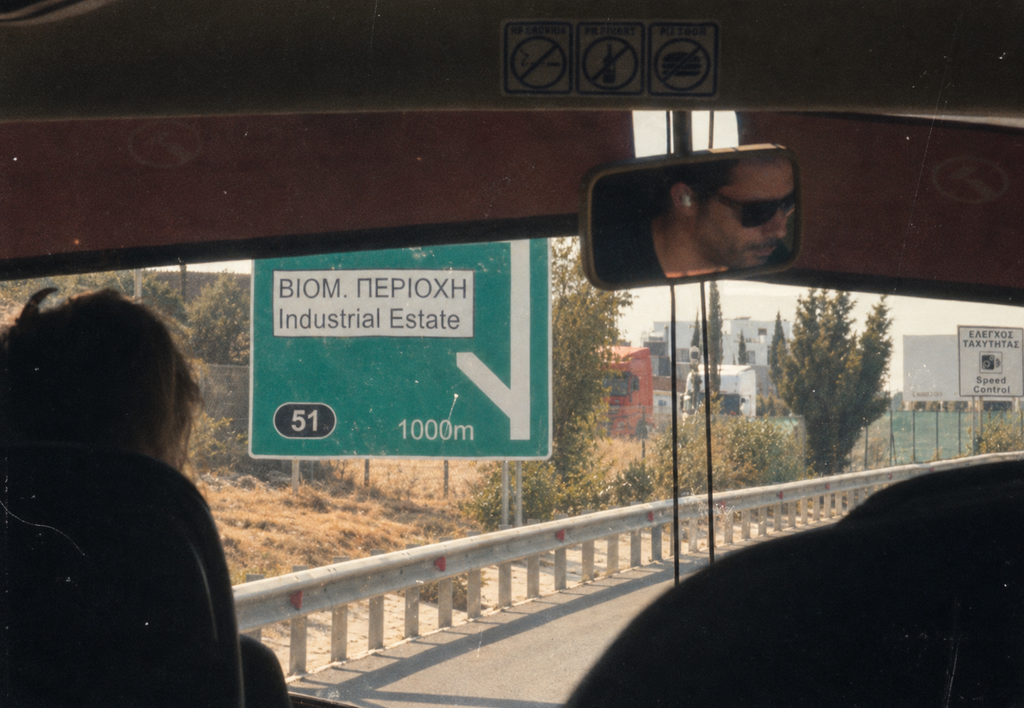
The sea appears and disappears: sometimes opening up fully past a hill, sometimes vanishing behind warehouses and gas stations. Along the roadside, dry grass the color of straw, bleached almost white, and prickly pears growing straight out of the rock. In summer everything here looks like it ended two hundred years ago and no one’s cleaned up since.
I rode and counted the time.
Sunset is around eight. I needed to be on-site no later than seven — with a margin to find the socket. The bus reaches Limassol around six-something. From there, a city bus to Amathus.
The math worked out badly. Everything was cutting it close, and any delay would eat the entire margin.
Somewhere in the middle of the trip I took the figurine out of my backpack and unwrapped the towel — right there on my lap, since I was sitting alone and no one cared.
Twenty centimeters of limestone. Nine openings — three rows of three, figures shoulder to shoulder. I lifted it to the window, against the light, and counted again, even though I already knew the answer.
Nine places. I’d already crossed eight off, at a table in Venice with a view of the Piazza San Marco.
One left. The woman across the aisle glanced at me, then at the stone, and turned back to her phone.
Limassol greeted me with the ordinary bustle of a workday winding down. The waterfront, port cranes, new towers by the sea, traffic backed up at the entrance to town. People heading out to dinner.
The city bus is a whole different experience from the airport shuttle.
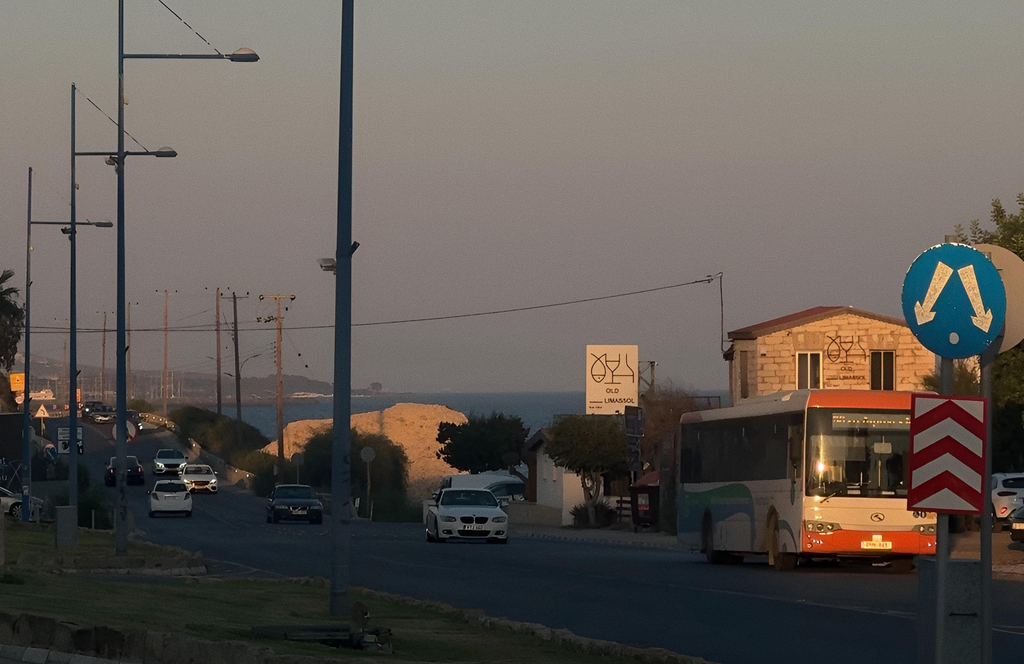
It runs along the coast and stops every three hundred meters. People get on from the beach — wet hair, towels, flip-flops. Workers get on, done with a shift at the hotels. Someone’s carrying groceries. The air conditioning is weak, and the doors open at every stop, letting the heat in.
I sat with the backpack on my knees, watching the strip of hotels go by on the right: hotels, apartments, more apartments, sun loungers, umbrellas — the same thing you’d see on any Mediterranean coastline.
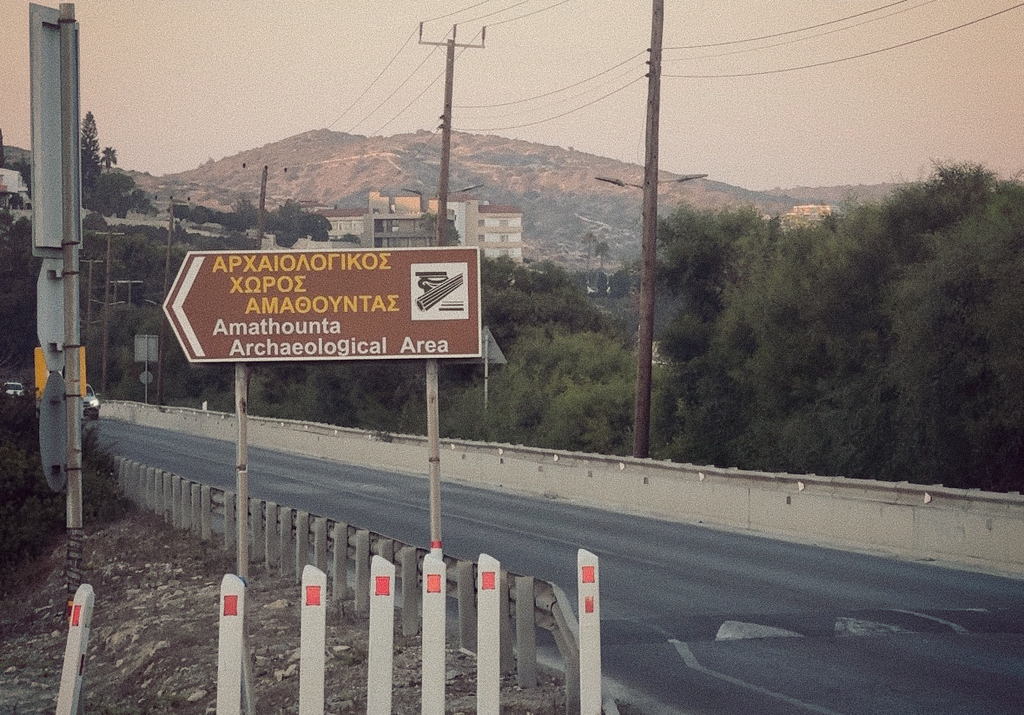
Between two hotels, a sign flashed by — brown, like every sign marking a monument: Amathous Archaeological Site.
Four thousand years ago, the city of Amathus stood here, and now between it and the sea there’s a parking lot and sun loungers.
I pressed the button and got off at the next stop.
It was nearly seven in the evening. The sun sat low, striking straight into my eyes.
Placing the Figurine in the Socket
The lower city was already closed. The cashier had already packed up, and the guard looked at me like someone who didn’t understand what a schedule was.
But I didn’t need the lower city. I needed the acropolis — the high point, where the temple had stood. The entrance there is always open: a path climbs the slope past the fencing, and no one guards it.
The climb took about fifteen minutes. Rock, dry grass, thorns, cicadas that hadn’t gone quiet yet even at seven in the evening. Behind and below, the sea and a strip of hotels along the shore; ahead, nothing but the slope.
There’s no temple at the top.
The book says so plainly, and you still aren’t ready for it. You expect columns, a portico, something — anything — vertical. Instead there’s a flat platform at the top of the hill, scattered blocks, pieces of architecture in the grass, and rectangles of foundations set into the ground. Everything horizontal. Everything knee-height.
“Do not look for a temple. There is no temple. Look for where the temple stood.”
I walked the platform twice.
The first time, quickly, looking down and realizing I had no idea what exactly I was looking for. There are hundreds of recesses in these blocks: gouges, sockets for cramps, quarrying marks, holes from the pins that held blocks together. Any one of them could have been the socket, and none of them looked special.
The sun had dropped low enough that the shadows from the blocks stretched across the whole platform.
The second time I went slower — along the edge of the foundation, the western side, the one facing the water.
And I found it.
Not because it glowed or marked itself out somehow. Because it was the one recess whose edge wasn’t chipped. Every other gouge in these blocks is a mark of work or damage: ragged, uneven, with broken edges. This one had been made deliberately and carefully, a socket cut with even walls, one that had barely suffered in thousands of years.
I crouched down and took out the figurine.
It fit into the third opening.
Not the first, not the middle row — specifically the third, lower right. I didn’t realize it right away: I tried setting it straight first, then turned it, then again. On the fourth try, it seated.
Seated isn’t quite the word. It went in like a part into a machine. No play, no gap, no need to press it down. Twenty centimeters of limestone that had spent eight years in an evidence room somewhere in South America settled into a socket carved by someone, at some point, unknown to anyone — and it matched.
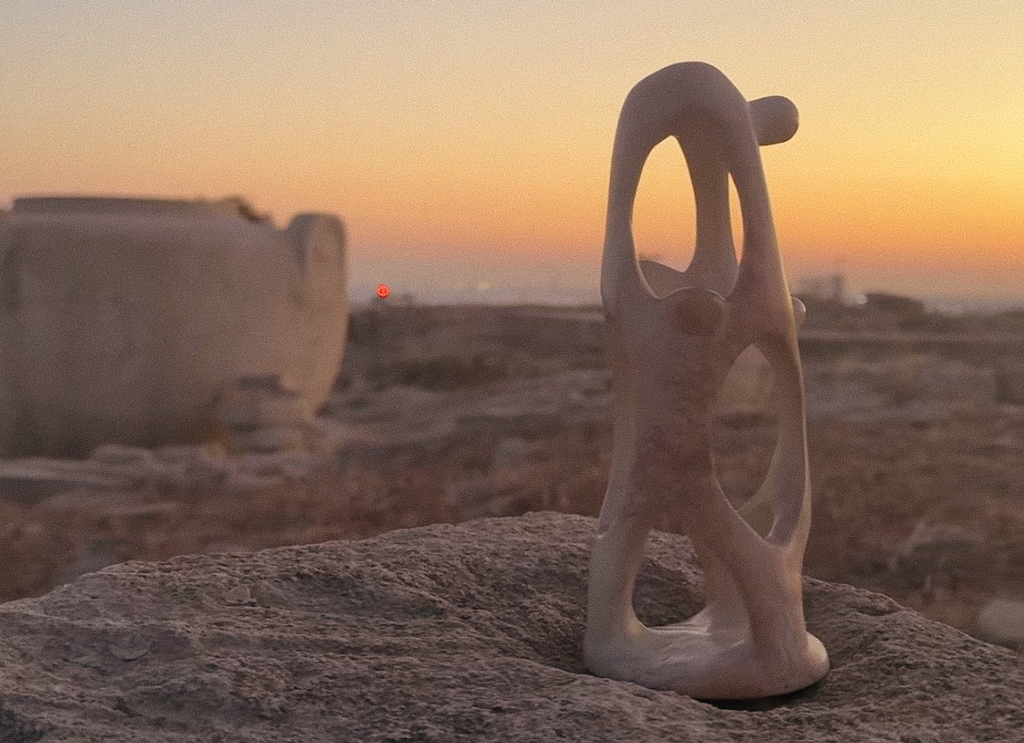
I took my hands away.
It stood perfectly level, as if it had never been taken out of there.
I stepped back a couple of paces and sat on the block across from it. Checked the time: 7:47 PM.
And waited for sunset.
How Would I Know Whether My Plan Worked?
The method for checking is described in the book on its own line, and it’s the one place where the secretary allowed himself something other than dry prose.
“And when the share is set in its socket at the hour the sun enters the water, you shall know that the figure has not closed. You shall know not by thunder, nor by trembling of the earth. The sky shall take the color of wine and tempered iron and hold it longer than is proper; and the water shall repeat it from below, and there shall be two skies, and no line between them.”
And below that: “He who sees it has held it. He who does not see it has come too late.”
So there’s only one way to check: the sunset. If, after I place the figurine, the sky turns red for longer than usual and the sea repeats it, then I wasn’t too late, and the place was the right one. If nothing happens, then somewhere in Kouklia, Cordier’s people have already placed their stone, and this was all for nothing.
I know how that sounds. I also know about the dust from the Sahara.
Did the Sign Come to Pass?
For the first ten minutes or so, nothing happened. The sun dropped toward the water, turned orange, then red, the sea beneath it darkening — an ordinary sunset, the kind you’d see two hundred times a year on this coast.
At 8:04 the sun touched the horizon. By 8:09 it was gone.
And that’s when it started.
The sky didn’t go dark. It took on a color — starting at the lower edge, then higher, then edge to edge, and it wasn’t pink and it wasn’t orange, it was exactly the color written down on folio forty-one four hundred years ago: the color of wine and tempered iron. Deep red, with an inner glow, like cooling metal.
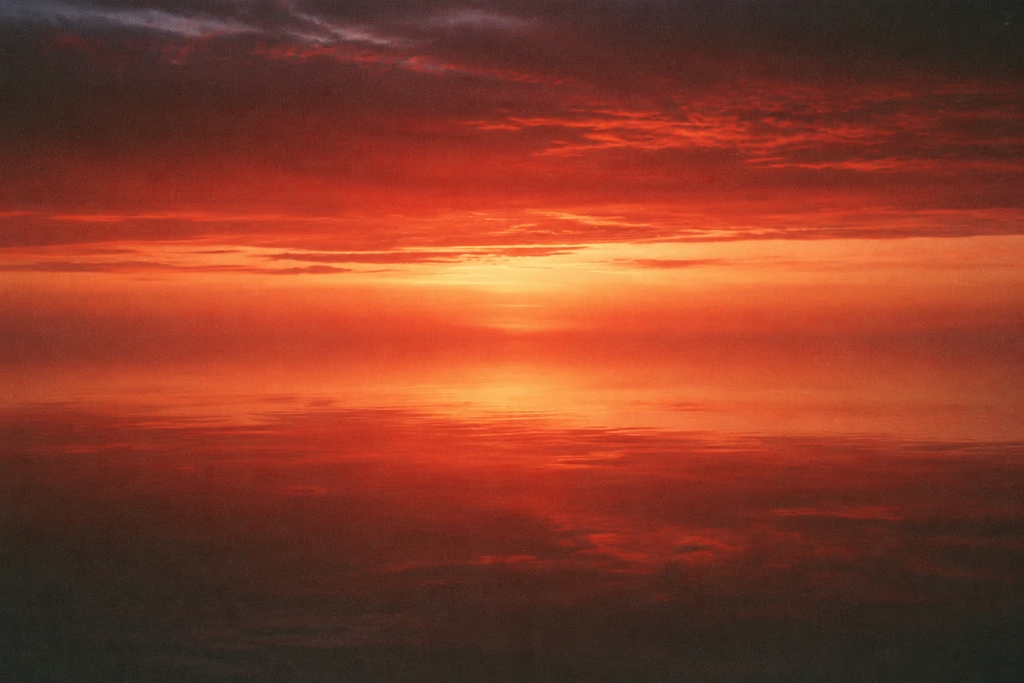
Normally, after sunset, this lasts about five minutes and fades.
It held for twenty-three minutes. I timed it.
The sea below the hill was calm, without wind, and it repeated everything completely — the same color, the same density. From up on the acropolis, the horizon became unreadable in the haze: there was no line where the water ended and the air began. It was one continuous red space, the same above and below.
Two skies. And no line between them.
I know how this gets explained.
Dust from the Sahara. Wind lifts it off the desert and carries it across the Mediterranean; the suspended particles scatter the light in a way that makes sunsets unusually red and makes them last longer. It happens on Cyprus several times a year, it’s in the weather reports, tourists photograph it and post it captioned “unreal sky.”
So everything checks out. Everything has an explanation. At least that’s what the skeptic in me kept telling itself.
I sat on the stone for another forty minutes, until it was fully dark and the lights of Limassol became visible below.
I wrote my clients one word: “Placed.”
They answered a minute later: “Acknowledged.” No questions, no thanks, no “how did it go.” Bureaucratic correspondence.
I didn’t write anything about the sky. Not because I was hiding it — I just didn’t know which box on the report it belonged in.
At around the same time, a hundred kilometers to the west, one of Cordier’s men was standing in Kouklia, over the foundation of the main temple of Aphrodite Paphia, trying to fit his stone into a recess it didn’t fit. What he felt in that moment, I don’t know. He may still believe, to this day, that he simply hadn’t found the right spot.
There’s one socket. And whoever gets there first, stays forever.
Not Your Concern
I went back the next morning — without any rush this time, in ordinary daylight, to look at everything with clear eyes.
The figurine was still there. In daylight it looked completely unremarkable: a gray chunk of limestone among other chunks, which none of the handful of tourists so much as glanced at. A couple of people walked within two meters of it and didn’t notice.
That’s probably how it should be. It likely stood here for thousands of years for exactly that reason — because no one was looking.
I sat on the same block and, for the first time, took a calm, genuinely close look at the socket.
And that’s when I started to feel uneasy.
On the floor of the socket, under the figurine, there was a mark running along the contour — a dark ring left by something that had stood there a long time. Not from my stone: it had only stood there one night. From another one.
A shape that didn’t match mine.
Someone had done this before. Placed their own stone here, and then taken it back out. Even though a share once removed doesn’t return — that’s written on folio twenty-two, and the compiler specifically noted that he’d heard it from four separate people and that all four had said the same thing.
I photographed the mark and sent it to my clients.
No answer came for three days.
Then a message arrived, one line long:
“Not your concern. Payment sent.”
I did my part. The stone stands, the circle is open, and old man Cordier didn’t get what he’d been chasing for four years.
I got paid, and I flew home.
But there’s one question that’s been on my mind ever since, and no one is going to answer it for me.
If a stone had already been removed from there once before — and the world didn’t end, and the socket became free again — then either the compiler of the inventory was wrong about the one thing he specifically said he’d double-checked.
Or someone found a way.
And if it’s the second one, then Cordier will probably find out about it before I do.